A tourist or Miami resident walking through Wynwood today is likely to see colorful murals covering walls, buildings, and other surfaces throughout the neighborhood. Artists from dozens of countries have helped turn a once-neglected industrial district into a major destination for Miami graffiti art. The transformation shows how street art can reshape a neighborhood, attract visitors, and influence its identity.
Wynwood’s rise and decline in the 20th century
Wynwood developed as an industrial and working-class district in the 1920s, with garment factories and warehouses becoming an important part of its economy. After World War II, the neighborhood attracted many Puerto Rican immigrants and became known as “Little San Juan.” Over time, other immigrant communities also settled in the area.
The neighborhood entered a period of decline as manufacturing companies moved production overseas, particularly in the late 20th century. Factories and warehouses closed, leaving many buildings vacant. Their large, windowless walls eventually became ideal surfaces for graffiti and murals, setting the stage for Wynwood’s artistic transformation.
Tony Goldman’s bet on Miami graffiti art
A turning point in Wynwood’s history came when real estate developer Tony Goldman began acquiring properties in the neighborhood in the mid-2000s. Having previously helped revitalize New York’s SoHo and Miami Beach’s South Beach, Goldman saw potential in Wynwood’s industrial buildings and believed art could attract new audiences.
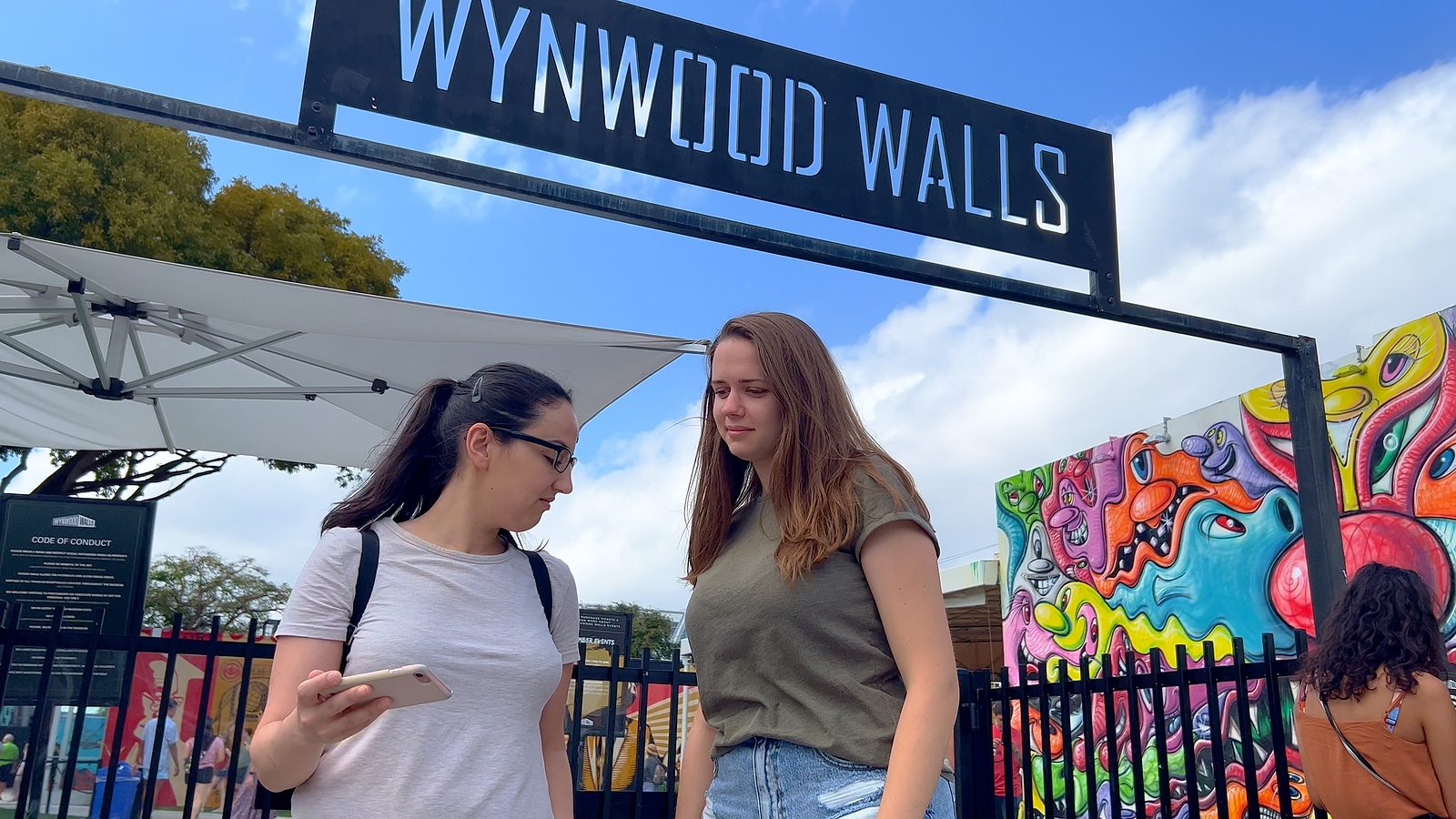
In 2009, he partnered with curator Jeffrey Deitch to launch Wynwood Walls, an outdoor street art museum featuring murals on six warehouse buildings. Goldman invited internationally recognized artists, including Shepard Fairey, to transform the walls into large-scale works of art. The opening coincided with Art Basel Miami Beach, helping the project gain international attention from the outset.
Wynwood today
What began as an ambitious experiment has helped make Wynwood one of Miami’s best-known cultural destinations. Following Goldman’s passing, Jessica Goldman Srebnick, his daughter, has continued developing the Wynwood Walls program. The site has featured more than 130 artists from over 30 countries, while the surrounding neighborhood has expanded to include galleries, restaurants, breweries, boutiques, and other businesses.
However, this success has also brought challenges. Rising property values and commercial rents have put pressure on independent businesses, galleries, and artists who helped establish Wynwood’s creative identity. Some have closed or relocated to more affordable areas, including Little Haiti and Allapattah. As Wynwood continues to evolve, its murals remain a defining feature of Miami graffiti art, even as rising costs make it increasingly difficult for the local creative community to remain in the neighborhood.