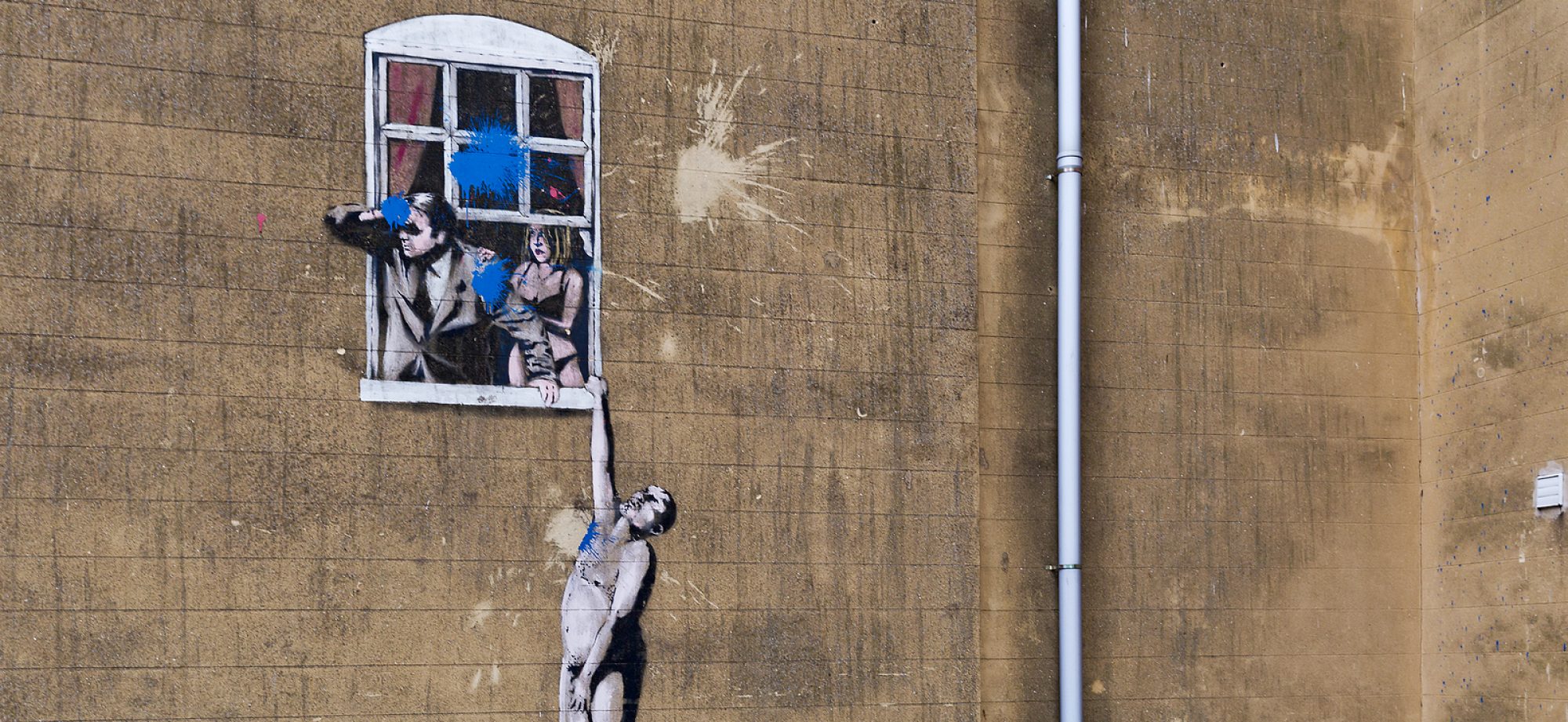
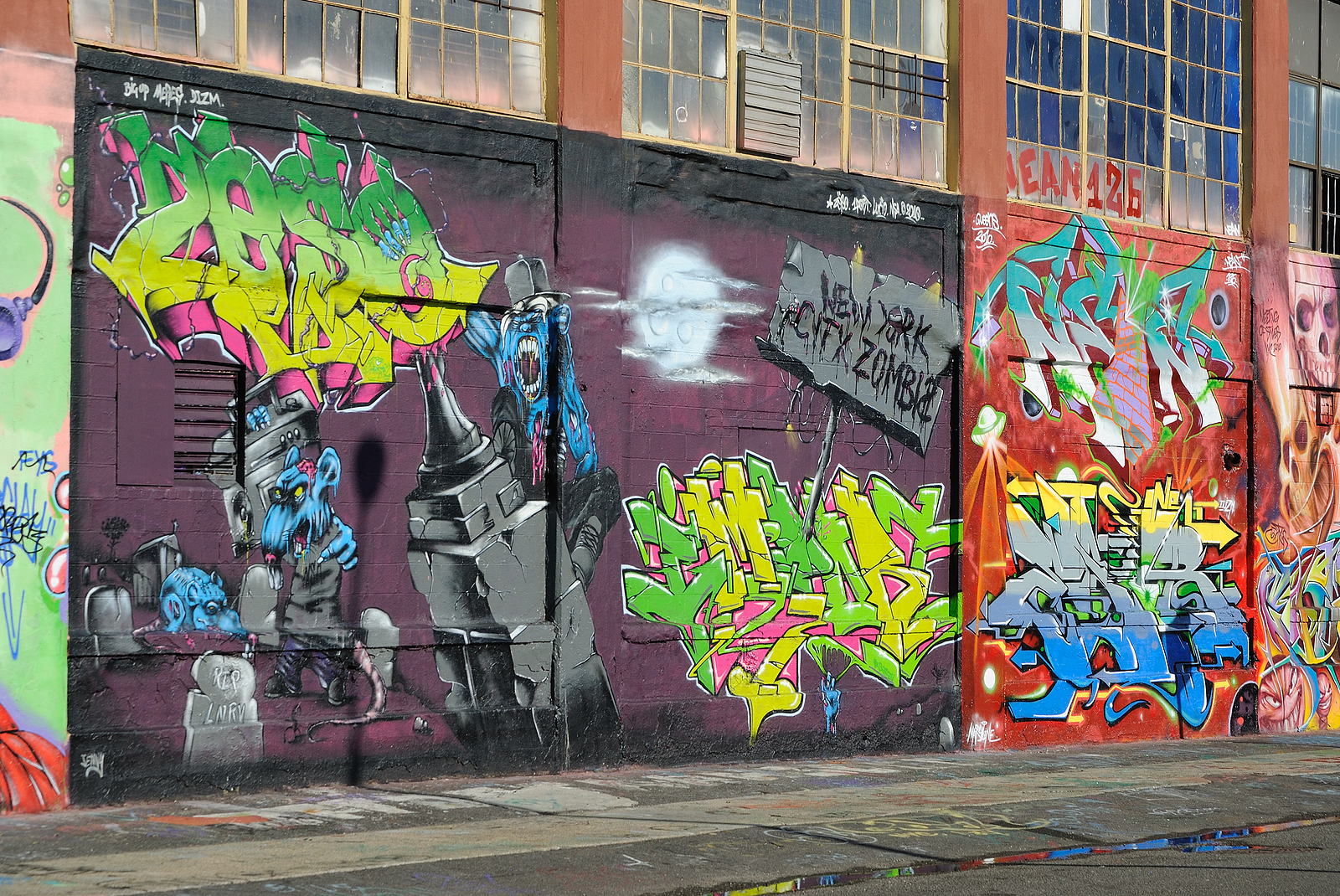
Every person related to street art in some way knows the tragic story of 5Pointz. One of the world’s best-known collections of outdoor murals disappeared on November 19, 2013, when a crew of workers arrived at the site under the cover of darkness and painted the walls white. The Mecca of the Aerosol Art World, an internationally celebrated street art graffiti artifact, unlocked a long-lasting legal battle over the role, status, and ownership of street art.
The profound role of 5Pointz in street art graffiti culture
The history of 5Pointz goes back to the 1990s, when the developer Jerry Wolkoff allowed street artists to paint the exterior of his Long Island City warehouse complex. The buildings were unused and forgotten at that time, but by 2002, when Meres One stepped in as a street art curator, the complex grew in popularity. Named 5Pointz by the five boroughs whose artistic energy it concentrated, the complex attracted the international street art community, from celebrities to tourists to mass media. The building’s walls became a living gallery of rotating street art.
The dark page in 5Pointz’ life story started in 2013, when Wolkoff decided to demolish the complex for the sake of a luxury condominium construction project planned at that location. Without getting involved in a due process of negotiation with the street artists whose work covered the walls of 5Pointz, Wolkoff made a quick but wrong decision. The developer painted the walls white overnight before even receiving the demolition permit, causing a huge backlash among artists.
The legal consequences of the 5Pointz decision
The street art graffiti destruction move of Wolkoff made him pay a high price later. The developer faced 21 lawsuits from the artists under the Visual Artists Rights Act (VARA) of 1990, which resulted in over $6.75 million in compensation by 2018. However, the positive court decision couldn’t reverse the vandalic act of destroying the creative product of dozens of artists who contributed to 5Pointz’ unique look for years. While even Banksy joined the advocacy group trying to save this street art object during his temporary stay in New York in 2013, 5Pointz failed to be preserved.
Still, this legal ruling became the first-ever recognition of street art’s legal status and the federal violation of destroying it without notifying the artist. 5Pointz is widely cited as a landmark legal victory of street artists, setting up a useful precedent for protecting artwork from unlawful destruction.