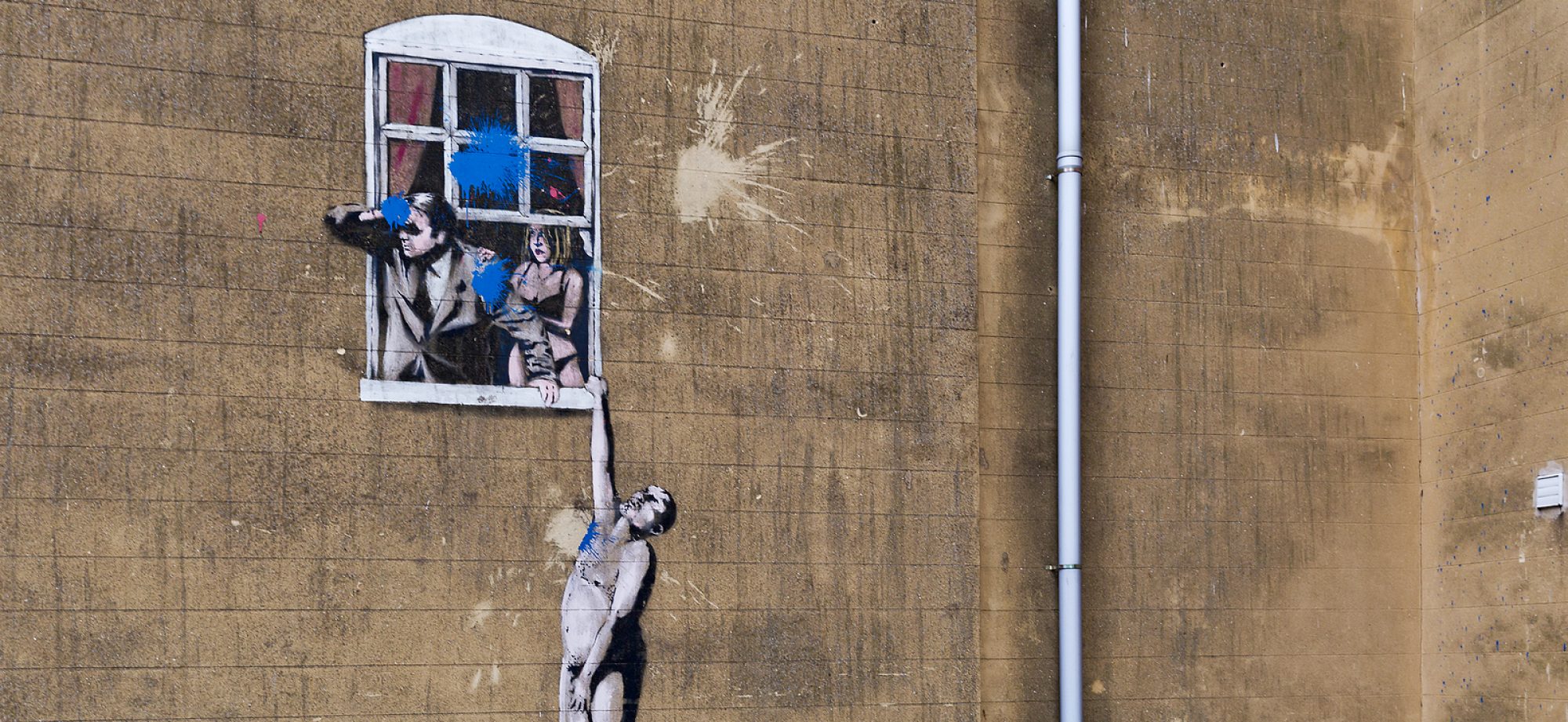

Is graffiti art or vandalism? This question has been troubling many people, from art critics to galleries, auction houses, and collectors. There is still no easy answer, especially after the rise of such figures as Keith Haring, Jean-Michel Basquiat, and Banksy.
Indeed, street art can be interpreted in different ways. One person may see a tag sprayed on a shuttered storefront as a property crime, while another may recognize a signature, a form of self-expression, or a cry of frustration. The disagreement often lies in who decides what the city’s exterior looks like.
Is graffiti art?
Defenders of graffiti advocate for its recognition as a unique art form that requires no gallery or funding to emerge. It is also a politically and institutionally independent form of artmaking that can resist established power structures. Historically, graffiti emerged as a grassroots form of social or political self-expression in communities where people lacked other channels for artistic expression. Therefore, the illegality of graffiti has also become a distinctive aspect of its meaning, allowing talented individuals to be seen without formal art education or patrons.
Why do people think of graffiti as vandalism?
The legal answer to the question “Is graffiti art?” is less optimistic. When graffiti is created without the property owner’s permission, it may be treated as vandalism or another form of property damage, depending on local law. That’s why proven graffiti authorship can result in criminal charges, civil claims, or demands to compensate for the cost of removing the damage. Property owners may bear the cost of graffiti removal, while municipal cleanup budgets can reach millions in cities with persistent graffiti problems. In this way, the philosophical question about the artistic value of graffiti can turn into a financial burden for authorities and property owners.
In search of middle ground
As with other sensitive topics, graffiti art also has room for legal creation and artistic recognition. To make sure graffiti stays intact and its author does not bear the risks of litigation or financial compensation, the process of its creation should be negotiated and confirmed in advance. If a wall is offered by the property owner, graffiti appearing on it is generally permitted. If graffiti painters decorate the walls of an abandoned industrial complex with large-scale bright images, the public may be more divided about whether the work should be preserved. If anonymous graffiti painters, with their faces covered to avoid cameras, hastily tag train windows or subway walls, the verdict is usually much clearer: unauthorized graffiti on public or private property can constitute a property crime.